Do you ever wish you could read your clients’ minds? You advise your clients on big planning decisions related to retirement, business, family and community, and uncovering their goals and motivations is a necessary part of the process. When it comes to charitable planning, Dr. Russell James has it down to a neuroscience.
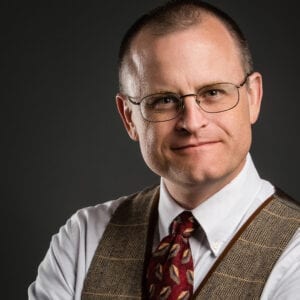
Russell James, J.D., Ph.D., CFP® is a chaired professor in the Department of Personal Financial Planning at Texas Tech University where he directs the on-campus and online graduate program in Charitable Financial Planning. Dr. James has published research in over 40 different peer-reviewed scientific journals and has been quoted on charitable and financial issues in a number of news sources and publications.
In his research, Dr. James employs methodologies including fMRI (functional magnetic resonance imaging), experimental psychology, psychological theory, survey research and analysis of large datasets to explore the unconscious and conscious processes that impact charitable decision-making.
In anticipation of Dr. James’ upcoming presentation for professional advisors in October, and to provide a glimpse into the minds of your charitable clients, we’re sharing four key takeaways from his research:
1) Charitable giving is a social act.
Dr. James’ work builds upon earlier neuroimaging research that shows the same brain regions that are used for social cognition and family connections are regions that are used in charitable giving decisions. Charitable giving is influenced by a hormone called oxytocin, which is associated with family bonding in mammals. Increases in oxytocin are also linked to increased giving. Charitable giving has also been shown to generate greater activation in reward centers in the brain when observers were present.
2) Formal language lowers charitable interest.
Since social and family norms influence giving, Dr. James encourages use of familial, rather than formal, language when discussing charitable goals with clients. Familial-social language include stories and simple words as opposed to formal contract terms.
In a 2014 survey, Dr. James polled participants on their interest in a variety of planned giving strategies like CGAs, CRTs, life remainder deeds, and bequest gifts. For each planned gift type, the tool was described in two ways – once using formal language and again using social language. For example, in describing a CRT, respondents were asked to indicate interest in “Mak[ing] a transfer of assets where you get an immediate tax deduction, still control the investment of the assets and receive income from the investments for the rest of your life with anything left over going to charity at your death” and “mak[ing] a gift where you get an immediate tax deduction,….” For each gift type, respondents’ interest in descriptions using social language (“making a gift”) was dramatically higher.
Additionally, when describing bequest giving, interest was comparatively higher when the description was preceded by a social prompt (e.g., “Many people like to leave a gift to charity in their will. Are there any causes you would support in this way?”).
3) Bequest giving is different.
National surveys reflect that among charitable donors (>$500 per year) ages 50 and up, less than 10% have charity in their estate plans. Results from Dr. James’ neuroimaging research show that the brain responds differently to charitable bequest decision-making than it does to lifetime giving or volunteering decision-making. When contrasted with lifetime giving, bequest decision-making uniquely activated two areas of the brain that are associated with autobiographical recall. Because bequest decision-making emphasizes “visualized autobiography” brain regions, research suggests people are more likely to support a charity or cause through their will if it connects to their life story.
When comparing different types of bequest decision-making, noncharitable bequests to friends and family engaged memory and emotion brain regions more than charitable bequests. This suggests that individuals may be more likely to support a charity or cause with a tribute bequest if it connects to the life story of a loved one.
4) Death is an unwelcome reminder.
All estate planning is a form of death planning. Death reminders provoke two stages of defense – avoidance and pursuit of symbolic immortality. In the initial stage of avoidance, many people would prefer not to think about their own mortality, which leads to a lesser likelihood of proactive planning. For this reason, Dr. James suggests the use of “mixed packaging” to introduce estate planning concepts in a more general and non-death-related context. For example, rather than holding an estate planning seminar, consider holding a general information session on “tax planning,” “protecting your assets,” or “financial concerns for seniors” to broaden the audience and topical focus, while still incorporating elements of estate planning into the program.
Certain factors like illness, age or loss of a loved one may trigger the second-stage defense to seek symbolic immortality, or the desire for some part of the self – name, family, community, values, etc. – to live on after death. Bequest giving opportunities that offer the ability to make a permanent or lasting gift also provide a form of symbolic immortality.
To learn more about Dr. James’ work, visit his website at encouragegenerosity.com.
To register for the October continuing education event featuring Dr. Russell James, visit cnycf.org/events.