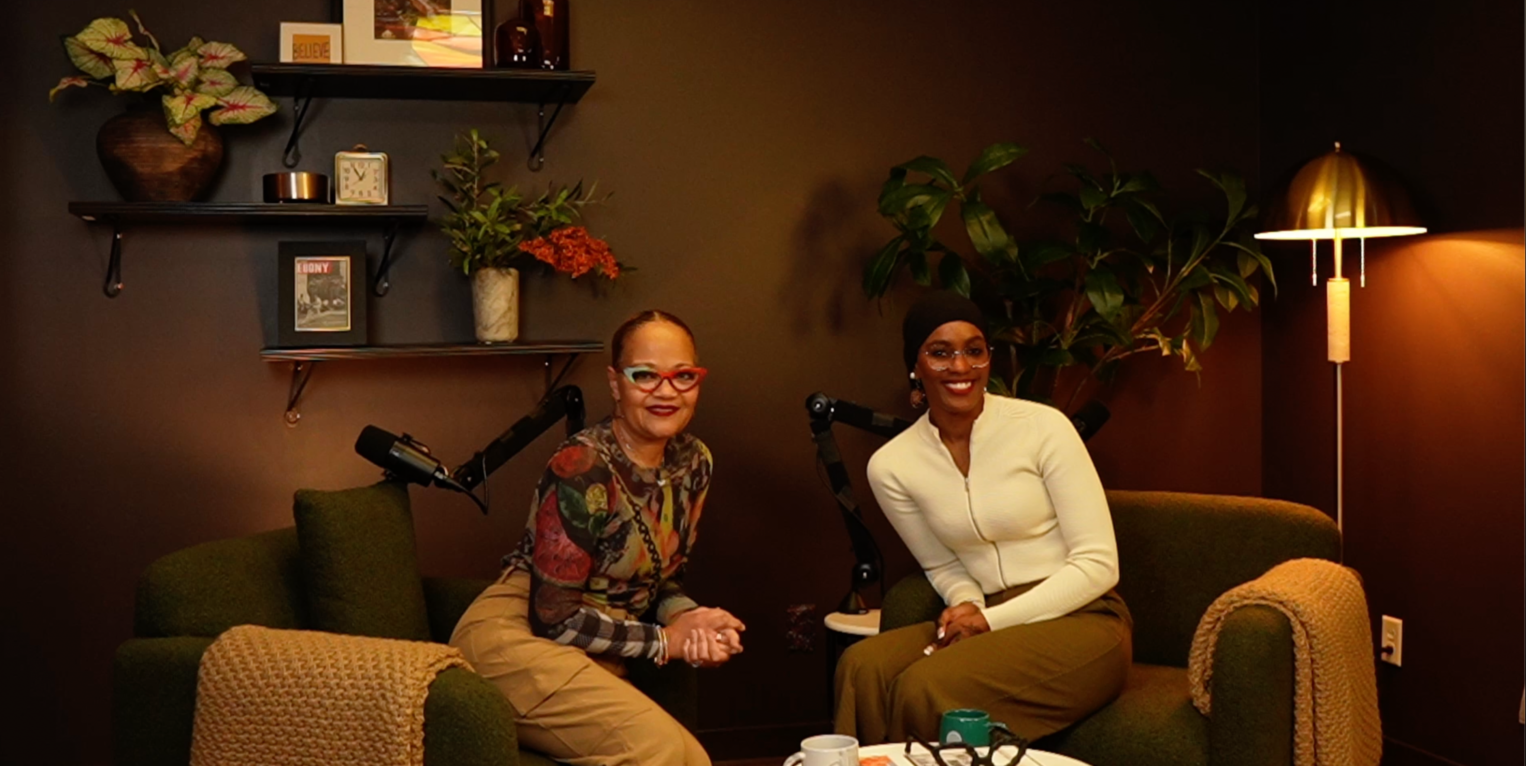
Episode 1: Sincerely, Hassina Adams: Learning Advocacy at Six Years Old
FULL TRANSCRIPT:
Melanie: Today’s episode is a love letter to people who are shaping Central New York, sometimes in quiet but always powerful ways. I’m Melanie Littlejohn, and welcome to Sincerely, CNY.
I am so excited about this podcast, and I’m so excited that we’re capturing the voices of people who are transforming and driving change right here in our backyard, in a place we call home.
When we decided to do this podcast, we wanted to elevate people who we might not always know or get a chance to hear from. When we think about philanthropy and the work we do here at the Central New York Community Foundation, and we think about the message around philanthropy, philanthropy is about giving to others.
We have countless examples that come from not only our donors, but community partners. But we really wanted to zoom in right now on the voices that everyone might not always hear from. We wanted to talk to you about how they are shaping the world, how they are leaning into philanthropy, and how they are helping inspire all of us to do good — to do good to help shape communities, to do good to help sow into another human being, to do good for the sake of just doing good.
As we begin this conversation today, I am beyond thrilled. I’m beyond thrilled for the people you’re going to meet, the people you’re going to hear from, and I guarantee you they will be people who inspire you to do more.
My first guest — and I am so thrilled about having this conversation — is Ms. Hassina Adams.
Let me tell you about Hassina. Today’s guest is a community leader and a public servant who serves as clerk of the Onondaga County Legislature. A graduate of Onondaga Community College and Syracuse University’s Maxwell School, she has built her career at the intersection of public service, advocacy, and community leadership.
Through her work and board service, she is dedicated to building pathways for others, particularly immigrant and refugee communities, to find stability, opportunity, and a sense of belonging in the places they call home. Please welcome our very first guest, Hassina Adams.
Hassina: Thank you for having me.
Melanie: Welcome, Hassina.
Hassina: Thank you.
Melanie: You have such a powerful spirit, a powerful aura. I have seen you talk about your journey on a couple of different occasions, and every time I’ve heard you talk about who Hassina Adams is and what shaped her, I am steadied on my feet. My heart grows 10 times the size, and you inspire me to want to do more. So can you share your story and what shaped who you are and what you do?
Hassina: Thank you, and I am honored by your remarks. I am a community advocate and public servant, originally from South Africa. I grew up in South Africa, but I was born in Uganda. My family fled political persecution in Uganda and sought asylum in South Africa. I spent a lot of my formative years there learning about the apartheid struggle, collective action, and how grassroots activism really helps to empower communities. A lot of that has intersected with the work that I do in the community.
But a lot of who I am today is also shaped by my mom. I was raised by a single woman who struggled and strived for her kids. Her wish was always to see us graduate school and advance our educational learning because she was not given that opportunity, unfortunately, coming from a poor background.
She would really instill in us a passion for learning and giving back. You don’t just reap the rewards of all these amazing privileges of being able to go to school and expand your horizons, but also give back to those who, unfortunately, don’t have the same resources, privileges, and opportunities.
Seeing her live these words also inspired me because I would see her take food from our house, even though we didn’t have much, and give it to our neighbors. I would see her take in strangers because they had nowhere else to go. I would also see her come to school and share our home meals with kids in class.
Growing up in that environment allowed me to see that, yes, we didn’t have much, but the little we did have always went a long way. Withholding was never in our minds. It was always, give and you’ll receive more.
That’s how I live my life now. I try to give as much as I can because I know that by empowering those around me, I help to uplift the community that helped raise me.
Kind of tying all this in, coming here to the U.S., my mom always dreamed of making sure that we were in a stable environment. She feared that we would be repatriated and ultimately, unfortunately, meet our demise. So she applied for resettlement through the United Nations High Commissioner for Refugees, and that application process took about five years.
Melanie: Wow.
Hassina: Yeah, it’s a rigorous vetting process. You go through a lot of interviews with Department of Homeland Security officials. You go through security screenings. It’s a rigorous process.
In the five-year application process, she fell ill and passed away. She was always concerned that she didn’t know what would happen to us if that happened. We were very lucky that we had a team of people who cared about our future and were really invested in making sure that something positive came out of such a tragic experience.
When she passed, our caseworker visited us, which is not usual. Usually when that happens, they kind of leave you to the system. But they were really touched by our story and visited us and let us know: your mom has passed, but we want you to try to apply for resettlement and see what happens.
It’s out of their hands. It’s now, when we go through this application process, between us and the official who sits before us and whether or not they believe we will be contributing members of this community when we resettle.
So we went to the interview and we spoke to the officer. At the end of the interview, he said, ‘I’m really inspired by your story, despite the fact that you just lost your mom.’ I think it was less than six months. He was really excited for us and said, ‘The U.S. will benefit by having you guys here.’ He ended up approving our application, and we came here March 31, 2015.
We were embraced by this community. We were welcomed as unaccompanied minors — no parents — scared of what was to come. The community really rallied around us and helped us figure things out.
Northside Learning Center honestly helped us with schooling, figuring out schooling, support services, and more. We just had a great tribe of people who cared for our futures and really wanted us to succeed.
It is that powerful collective action that made me realize that it matters when people stand up in their respective communities and give back, especially when there are marginalized folks who need that support. My work lies at the intersection of advocacy, empowerment, and helping people thrive.
Melanie: How many siblings did you have, and where were you in the order of those siblings?
Hassina: I have an older sister, and then me, my brother, and my youngest sister. So there are four of us. My older sister has a son now, and he’s 10, so he’s like the physical manifestation of how long we’ve been here. Every year he grows, he is a reminder like, ‘Oh wow, we’ve been here this long.’ So it’s great.
Melanie: Thank you for sharing this part of your journey and what shaped you. Four siblings here in this community that warmly embraced and welcomed you and your siblings. What was it that helped you as a family unit build that resiliency? Because you were still technically kids, right? And I know, thank goodness, there were other people who embraced you and loved you, but there had to be something internal that mom must have sowed in.
Hassina: Yes. My mom, I think, just had so much forethought about the future. She would worry a lot. Growing up, she would always take me with her every time she would go out to seek support. She would often tell me, ‘These are the people to reach out to if something happened to me,’ or, ‘This is the community member I go to when I have a question.’
Just being around her helped me develop advocacy, because she would advocate for herself. No was never an option for her, and if there was a no, she would always try to figure out an alternative pathway. She was very creative, and I think I developed that skill set seeing her live.
I will be honest, though. Growing up, I always felt burdened by that because it just felt so unfair. Everybody around me got to experience childhood. They got to be children. That just wasn’t an option for me, and I resented that.
Melanie: Mm-hmm.
Hassina: But in hindsight, I really appreciate it now because if it wasn’t for that, I don’t know where we would be. I don’t think I would have known, ‘Hey, this is who to reach out to,’ or, ‘This is the application process,’ or, ‘If no is an option, these are the alternative options to explore.’ These are hard skills that you don’t learn passively. It’s through active learning. Now I appreciate her and all her sacrifices, but back then, when you’re a child, it doesn’t click.
Melanie: How old were you?
Hassina: I started going to interviews with immigration lawyers from the age of six. The moment I could read, I would read all of the letters we’d receive. The day I learned how to write, I was writing letters. I was with her from the age of six up until she passed away when I was 17.
Melanie: So at six years old, you started learning how to be an advocate.
Hassina: At six.
Melanie: And at 17, you became a full-on advocate for your family. I think I met one of your sisters.
Hassina: Older.
Melanie: Your older sister. I met your older sister. I think it was at the Leadership Classroom dinner, and you were being recognized for your advocacy, right? But you were really being recognized for your power and resilience and your unselfishness. I looked at your sister as people were talking about you, and she was full. She was so full of pride. I can only imagine your mother was also smiling, saying, ‘Look what I did.’
I know you do a lot of this work today in terms of trying to create belonging and to create a space where another young advocate can figure out how to survive through this process. What do you tell them? How do you help guide and nurture them to know, ‘You’re going to be okay’?
Hassina: I tell them it’s going to be a long, bumpy road, but there is light at the end of the tunnel. I always reflect back to my own experiences when I step into any advocacy role because I understand that a lot of who I am is shaped by my own lived experiences. I use them as a catalyst to really strengthen the resolve of those around me.
I went through it. I understand how hard it is to survive. I understand how hard it is to look for a silver lining when everything feels so bleak. But I also know that I’m not alone. I wasn’t alone. I had a team of people, a community of people, ready to help steward me even in those moments of darkness.
So I always remind folks that you’re not alone. You do have agency. It’s so important to always empower people to tap into their own strength and resolve to tackle the challenges that they experience, because once you do that, you allow them the opportunity to develop tenacity and resiliency and to also be champions of their own destiny.
Yes, we’re there to steward and support and assist, but at the end of the day, they are the ones who need to take charge of their own lives and carve that path forward. So I always remind people that it seems bleak right now, but I promise it will get better in time.
Faith has kept me grounded always. My mom was really religious, would take us to the mosque to pray. She had such a strong connection with God that I see remnants of that instilled in us and continuing through us as well. Our connection with God first started because she had that strong connection.
For folks who do believe — because we all come from different faith backgrounds, and whether you believe or not — I always tell people, rely on your God. Faith is so important in helping people navigate situations where, in reality, it’s bleak. But when you have hope, you look forward to something, and you believe that there is a lesson behind all these things.
It may not make itself evident now, but down the road, those lines will connect and the bigger picture will appear. I say that for myself. At the time when my mom would take me with her, it didn’t make sense to me. But when she passed, it was like, ‘Whoa, light bulb.’
It’s a conflation of all those things: empowering people to be their own agents, encouraging them to lean into their faith, and also working with them to find solutions to these issues.
Melanie: When we think about helping people find agency in their own lives, we think about this community that has done wonderful and beautiful things. If I gave you a magic wand and I said, ‘Hassina, wave that magic wand and create community, or in the words of Dr. King, a beloved community,’ what would you do? What would you want to see more of, less of, or not at all?
Hassina: More of would be greater investment in impoverished communities living in certain parts of this city — the North Side in particular, because I live there. I know the infrastructure is so dilapidated, and when you live in a neighborhood where things are so bleak, that feeds into your reality.
I would want greater investment in housing and the roads to help folks feel pride about the place that they live, to give them dignity.
I would also invest in education. I am where I am because my mom pushed us to pursue our education. It’s so important that kids are given that opportunity because it helps them expand their horizons. It allows them to know that, with this pursuit, something better is coming in the future. Then you can use your skill sets to support your community, uplift your community, and help empower those around you.
Also, provide quality jobs for folks to earn an honest living, but also be able to use that money to support their families and reinvest in their communities.
In terms of seeing less of: crime, honestly. When we used to live on the North Side, there was a point where there was a shooting outside our house and we had to duck down because we were so scared that a bullet might pierce through the walls and take one of us out.
I know that law enforcement is doing the best they can with limited resources in terms of manpower. We always hear recruitment is hard, so I really appreciate the work that they’re doing.
Melanie: More of, less of, or not at all?
Hassina: Oh, that’s a hard one. I don’t know.
Melanie: We’ll come back to that because I think we’re going to hear an answer. Your work now in the legislature as the clerk is a powerful role. I think I’ve also heard and seen you talk about using all of your life experiences to do good. How might you use where you are now to help change or strengthen community?
Hassina: At least in my own personal capacity, because my role is apolitical. I serve the full legislative body. But when a question arises about supporting the New American community, immigrants, that’s where I lend my expertise because that’s my background. This is what I know. This is what I’ve lived. These are also the folks that I support and advocate for. So when there’s a question about that, I provide guidance and recommendations.
At the grassroots level, when talking to folks in the community, I share with them my journey and where I am and how important it is to be civically involved. When you are engaged in the political system, you are then able to amplify your voice with those who have the power to impact you in real, tangible ways.
So I push for our community to go out and vote, to invite elected officials and talk to them about the issues that they’re experiencing, about solutions that they’ve been exploring, and how they can work collaboratively to ameliorate those issues affecting the community.
We recently hosted — I sit as president of the New American Forum — a leadership forum with Mayor Walsh and Chief of Police Mark Rusin. We talked about the issues affecting our community in relation to public safety and immigration enforcement, which is a huge topic right now. We came up with solutions at that meeting.
When I engage folks in our community in the political process and allow them to be agents of change, and to ask folks who have the power to meaningfully impact their lives, I see how that empowers them and inspires them to be more involved and then also go out and do the same with those around them.
My role right now — being in government has shown me how important it is to work on the ground, to inspire folks to get out there and educate themselves about the voting process, how to be an engaged citizen, and how to be more proactive in tapping into existing resources.
Melanie: Hassina Adams, you are a powerhouse with a soul that’s paved in gold. You are doing things to help each one of us in ways that you, my friend, don’t know yet. But I promise you, you are touching and changing lives.
Thank you. Thank you. I encourage you: keep elevating your voice. Keep being that advocate. Keep being that great and wonderful human being. We need more people in this world just like you.
Hassina: Thank you.
Melanie: So thank you, and thank you for being guest number one.
Hassina: Thank you. It’s such an honor.
Melanie: Oh, it’s more of an honor to us. Thank you. We’ll be right back.
Community Foundation Donor Segment: Elaine and Steve Jacobs
Elaine: My name is Elaine Jacobs. I’m from Central New York all my life.
Steve: I’m Steve Jacobs. I moved up here in 1980 to buy a business, and I met Elaine. We’ve been married 21 years, and that’s going to keep me here.
A lot of business people, when they sell their business, don’t consciously think of where the wealth came from. In my case, when I did sell my business, I realized — and I’m hoping other people realize — that they garnered the wealth from this community. That’s one of the main reasons I felt it was important to give back through the Community Foundation. We have confidence that there will be people, as there are today, to properly steward our funds.
Elaine: It feels good to look out and know that your money is making a difference in our community.
P.S. The Next Chapter: Melanie Littlejohn and Neve Murphy
Melanie: Welcome back. I am so excited to introduce this next segment that we call P.S. The Next Chapter. This chapter spotlights a series within our podcast featuring young leaders from across Central New York who are creating and living in the embodiment of change right here in our backyard.
They’re creating change through generosity, service, and action. Each conversation offers a glimpse into the passion and purpose driving the next generation of change-makers in our community. Our first guest is an amazing young woman, and her name is Neve Murphy. Take a look.
Well, how are you, Neve Murphy?
Neve: I’m good. How are you?
Melanie: Good, good. Thank you so much for spending some time just to talk to me about you. When we pulled this segment together, it was really about capturing the voices of inspirational young people doing inspirational things, and you’re one of those people. So thank you so much for being here with me today. I certainly appreciate it.
One of the things that I would love everybody to know about who you are — and a couple of things that I’ve read about and know about you — is that you lead from your heart, but you also tie that to action. Before we get into all of this really cool and amazing work that you’ve done, can you tell me who you are just when you’re being you?
Neve: Yeah. First of all, thank you for reaching out and giving me this opportunity. A little about myself is that I love spending time with family and friends. I just love being around everyone. I also love sports, especially soccer and lacrosse. Those are the main sports I focus on. I’m very competitive, so I love playing and everything about that.
Outside of sports, my favorite season is summer. Every summer we spend the most time at the lake in Skaneateles, and I love surfing, so I love to be out on the water any chance I can. My family from Georgia comes, so I spend the most time I can with them, which I love.
Melanie: That’s fantastic. You just named a couple of my favorite things. I love soccer. Both of my children played soccer. I love Skaneateles Lake. But the most important thing is I love my family and friends.
Neve: Yeah.
Melanie: It doesn’t get any better than that.
What I loved about your story is the moment that you got connected with Tilly’s Touch, and it really began with one simple moment: noticing a child sitting alone. What was it about that moment that made you feel like, ‘Man, I really want to do something’?
Neve: About two summers ago, I was at a soccer tournament with my team. We had a thunderstorm delay, so we were all inside, and me and a couple of my teammates saw a little boy sitting on the bench alone. So we decided to go sit next to him and talk to him.
When we were talking, we realized he couldn’t speak English very well. A bunch of his teammates started coming over too, and they were all talking, dancing, laughing, joking around, and everything. Then their coach came, who I later learned was the director of Tilly’s Touch, Dale Johnson.
They told us that he had recently come to Syracuse from Sudan as a refugee, and he couldn’t understand what we were saying. We didn’t know that because he was just laughing. He wasn’t rude or anything. He was just so happy. I just thought it was really cool that even though he couldn’t understand us, he was having such a fun time, and everyone was just playing soccer, having fun, dancing, and joking around.
Melanie: What you just showed the world is that a simple act of kindness is transformative. By having that small interaction, it really helped you frame what it means to have good intentions and then act on it. Not everyone does that, but you did. What kept pulling you back to Tilly’s Touch after camp ended?
Neve: The first time I went to camp, I really wanted to go because my mom — I’d known a little bit about it because I’d seen their teams at local games or tournaments, but I didn’t know that much about it. My mom worked with them, so she told me a bunch about Dale and what he does for them and how they run. I was really interested by that.
When I first went, I walked in and everyone was already playing soccer. They had their own game set up. They were laughing, and they were all over the place. I went at first with a bunch of my friends, so it was really fun because we were all playing together. We were scrimmaging, but also helping them. There was some reading that we did with them.
My friends were busy the next few days, so they didn’t end up coming back. But I knew I wanted to keep coming back because it was such a different experience. It was such a different environment that I hadn’t experienced before. I hadn’t been in a neighborhood with high rates of poverty because I was used to the suburbs, and I just thought it was really cool to experience that diversity. Even though there were so many different backgrounds and cultures there, everyone got along, and the only thing that mattered was playing soccer.
Melanie: The only thing that mattered was playing soccer. To me, it’s about what you just outlined: finding commonality. All that mattered is that all of you connected around something common, and many adults are still trying to figure out how to do that. So props to you for doing that.
Neve: One of my messages is that you need to be able to realize that it doesn’t matter your background, where you come from, or your culture. It’s really about who you are. It doesn’t matter what’s outside. It’s how you are as a person. Little acts of kindness can go a long way. Even if you think it’s not the biggest deal, it could really change someone’s day.
Melanie: You are amazing. You are amazing. You are so amazing. You tutor, you coach, you encourage, you organize, you serve, and you seem so grounded and steady. Where do you think that sense of responsibility and compassion comes from in you?
Neve: I have a lot of high expectations for myself, so that motivates me to do well so I can succeed and accomplish my goals. In school, I get a lot of work, but whenever I have a question or don’t understand things, I make sure to get help from a teacher, either during school or after school.
I also have a lot of sports and a busy schedule, so I know if I have a practice, I want to get my work done before. I’ve learned a lot of time management skills from doing sports because, with a busy schedule, I know I have to get stuff done. My parents also give me a lot of support, and they help me stay focused and balance everything.
Melanie: It’s nothing like parents keeping you steady, right?
Neve: Mm-hmm. Yeah.
Melanie: You already have such a clear sense of service. You also have big, big dreams for your future in business, finance, and commercial real estate. All right, I love it. What kind of impact do you hope to make on the world as you grow into your dreams?
Neve: Yeah, that’s what I want to do. Right now I’m still 16, so I’m not sure. It could always change. But I know that no matter what my career ends up being or what my future looks like, I always want to stay connected to organizations such as Tilly’s Touch or similar organizations, and always be able to give back and help out whenever I can.
I also want to help people realize that they can make a difference too, no matter who you are.
Melanie: Well, Neve Murphy, thank you for being the light in this world that we need. We know you’re going to do some amazing things to keep growing the hearts of people you connect with. I’m so thankful and grateful for this time I had with you today. Keep shining. Keep shining. Great things are going to happen for you and around you because of you.
Neve: Thank you. Thank you so much for having me.
Melanie: Anytime.
Closing Remarks
Melanie: If you would like to nominate someone to be featured in our P.S. The Next Chapter segment, scan the QR code on the screen or visit cnycf.org/podcast.
We like to close each podcast with some thoughts. The first I’d like to leave you with is that listening to Hassina Adams’ story, it doesn’t matter the age you are to make an impact. Hassina talked to us about learning advocacy at the tender age of six years old. The power of change can start at any age. The power of advocacy and community resiliency can start at any age.
So don’t be afraid. Be courageous, and always remember that even when it’s dark, the sun always rises. Be ready. Be ready for the sun always rising.
Central New York, you make me proud. You make me proud that we embrace and share this sense of community and welcome everyone. We embrace our neighbors from across the globe to say, ‘You are family, and you are home.’
So audience, continue. Continue the notion that kindness surpasses it all. Kindness and love should walk hand in hand, arm in arm, because together we are stronger. We are stronger in the words of philanthropy, or in the meaning of philanthropy, to give to one another.
So please continue to do that. Please continue to lift and hear these stories of resilience. Take this conversation. Stay curious. Stay connected, and help what comes next.
Before I close, I need to share my bit of gratitude — my gratitude to this team that I am fortunate to work alongside every day: to Dana, Cory, Katrina, Yeisha, and to our community partner, ana gil.
Community Foundation is your foundation. We are here for this community. We have almost been here 100 years. We stand ready with you. We are here to make Central New York the best place to live, the best place to work, and the best place to call home. Thank you.
News & Stories
A Century of Giving: Building Tomorrow, Together
Sponsorship Opportunities.
Booker T. Washington Center Chosen by Cayuga County Residents to Receive $75K for Youth-Focused Project
The winning grant will be used to create a countywide teen resource program. The program will ...
Cayuga County Residents Invited to Vote on Community-Designed Projects for $75,000
Winning Project to be Announced at October 1 Community Celebration

Tips on getting your stocks in a pile (and other reminders)!
As clients turn their attention to year-end tax and financial planning, now is an ideal ...
Central New York Community Foundation Welcomes New Hire
The Central New York Community Foundation has hired Madeline Thibault, Esq., as Philanthropic Advisor.
More Than $1.3 Million Distributed to CNY Nonprofits
The Central New York Community Foundation recently distributed $1,301,606 in grants from our Community Fund ...
What We Are Up To | CNYCF Staff Updates
Our staff takes pride in not just serving our community but actively shaping its future. ...

Why Your IRA Might Be Your Most Powerful Charitable Asset
Your IRA can do more than fund your retirement. It can also help you support ...
Chamber Chosen by Cortland County Residents to Receive $75K for Expanding Childcare
The winning grant will be used to help the chamber hire a project professional who ...
A Century of Giving: Building Tomorrow, Together
Sponsorship Opportunities.
Booker T. Washington Center Chosen by Cayuga County Residents to Receive $75K for Youth-Focused Project
The winning grant will be used to create a countywide teen resource program. The program will ...
Cayuga County Residents Invited to Vote on Community-Designed Projects for $75,000
Winning Project to be Announced at October 1 Community Celebration
Tips on getting your stocks in a pile (and other reminders)!
As clients turn their attention to year-end tax and financial planning, now is an ideal ...
Central New York Community Foundation Welcomes New Hire
The Central New York Community Foundation has hired Madeline Thibault, Esq., as Philanthropic Advisor.
More Than $1.3 Million Distributed to CNY Nonprofits
The Central New York Community Foundation recently distributed $1,301,606 in grants from our Community Fund ...
What We Are Up To | CNYCF Staff Updates
Our staff takes pride in not just serving our community but actively shaping its future. ...
Why Your IRA Might Be Your Most Powerful Charitable Asset
Your IRA can do more than fund your retirement. It can also help you support ...
Chamber Chosen by Cortland County Residents to Receive $75K for Expanding Childcare
The winning grant will be used to help the chamber hire a project professional who ...