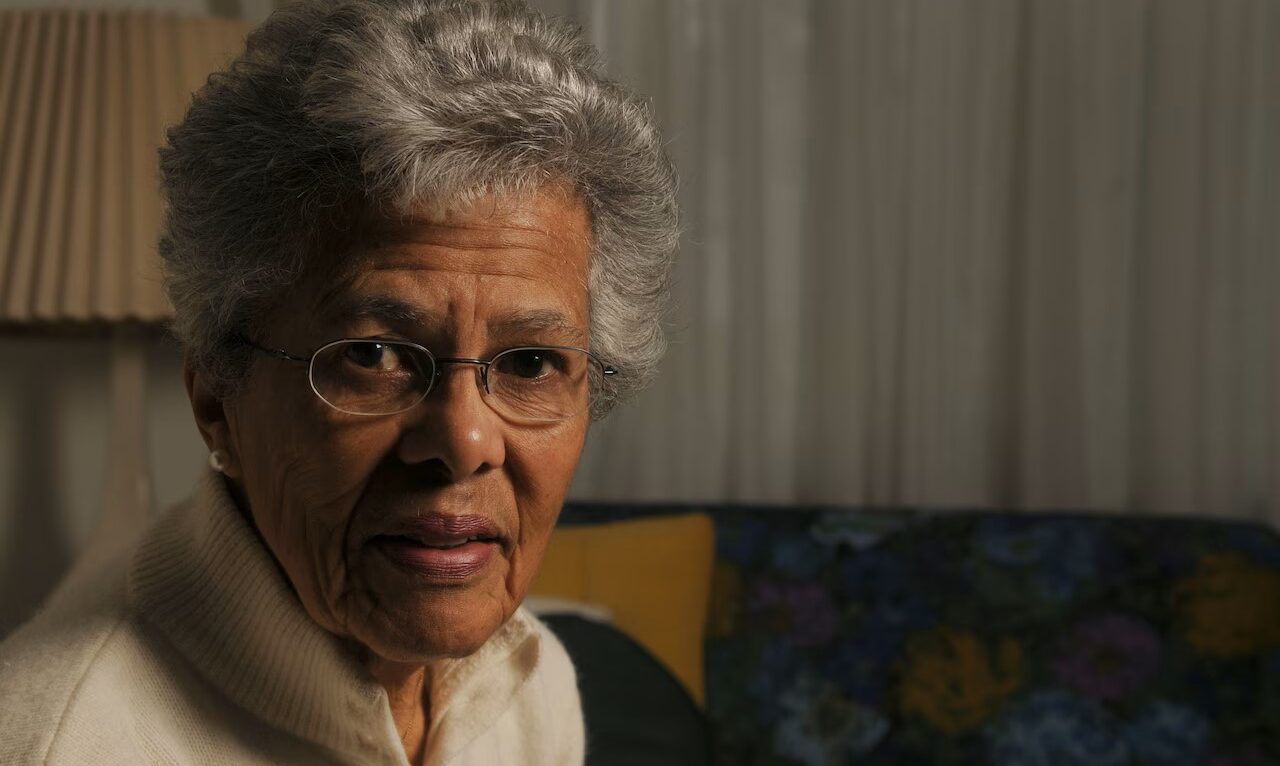
Pictured above: Marjorie Dey Carter | Photo by: The Post Standard
Before he became a renowned clarinetist and music teacher, one young boy in North Syracuse learned his most important lesson not from a concert hall, but from his first-grade teacher, Marjorie Dey Carter. When his parents removed him from her class upon discovering she was Black, Carter knelt down, hugged him, and said, “You know I still love you.”
Decades later, he would remember that moment as his first experience of unconditional love — and the foundation for everything he would become.
“Person after person after person told us about the experiences they had with her as students and what an influence she had on them,” said one of Carter’s cousins, Jo Anne Bakeman. “That was very much the norm for the way she treated students and expressed herself.”
Carter passed away April 25, 2024, at age 97 after decades serving the community she loved as an educator and volunteer. The first Black teacher hired by the Syracuse City School District and a trailblazer advocating for teachers and students, she named the Community Foundation as the recipient of her estate to fuel our Community Grantmaking, which provides perpetual support to address the greatest needs of the Central New York community. Nonprofit organizations receive grants through the program to fund innovative projects in the areas of arts and culture, civic affairs, education, health, human services, and the environment.
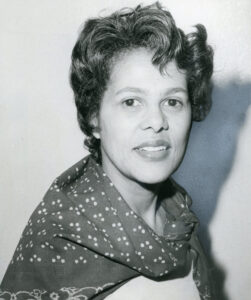
Carter, a descendant of the Black farming community in South Onondaga, lived in Syracuse. She aspired to be a teacher from at least sixth grade, when an attentive teacher encouraged her curiosity and intellect. Early on, she developed a love of the arts, music and reading. A lifelong Central New Yorker, she spent September to May at Syracuse University’s Delta Kappa Epsilon Fraternity House, where her father was the head custodian.
She graduated from the former Central High School on South Warren Street, where she was among just a handful of Black students in the college preparatory program. She graduated from Cortland State Teachers College in 1950, the first Black student at the school, and was hired to teach first and second grade at the former Syracuse City School District’s Charles Andrews School. She was the district’s first and only Black teacher for four years.
“I knew I had to do the best job I could, as a teacher,” she said in 1990. “[Being] Black, I knew I’d have to take a little extra step. My main concern was giving the kids as much as I could, stretching them as much as I could.”
She advocated for students, working on federally funded programs to improve classroom instruction for youth living in under-resourced neighborhoods in Syracuse, and she was an early proponent for team teaching. She later worked for the district as an instructional specialist.
In 1972, Carter became the first Black female president of the Syracuse Teachers’ Association. She was active in local, state and national professional education groups, including serving as a delegate to China and Lesotho, South Africa, to share educational practices.
She retired in 1990 after 40 years of teaching and remained active in the community.
She received numerous civic awards and accolades, including the SUNY Cortland Distinguished Alumni Award. An annual scholarship in her name is awarded to a SUNY Cortland student who is committed to teaching in an urban setting.
Despite her trailblazing career, Carter was quiet and matter-of-fact. “She never tooted her own horn,” Bakeman, her cousin, says. “Imagine what a big thing that was to be the first Black teacher and to lead the teachers’ union. She had such influence at a time when we needed it.”
According to her cousin, Carter’s bequest was right in character. “I believe she had a sense of her impact,” Bakeman said. “She saw the role of teachers as important. She was active in organizations she felt were important.”
“I believe she saw herself as extremely blessed. She believed she had been extremely fortunate and this is her way of giving back.”