Strengthening Postpartum Care for Rural Families
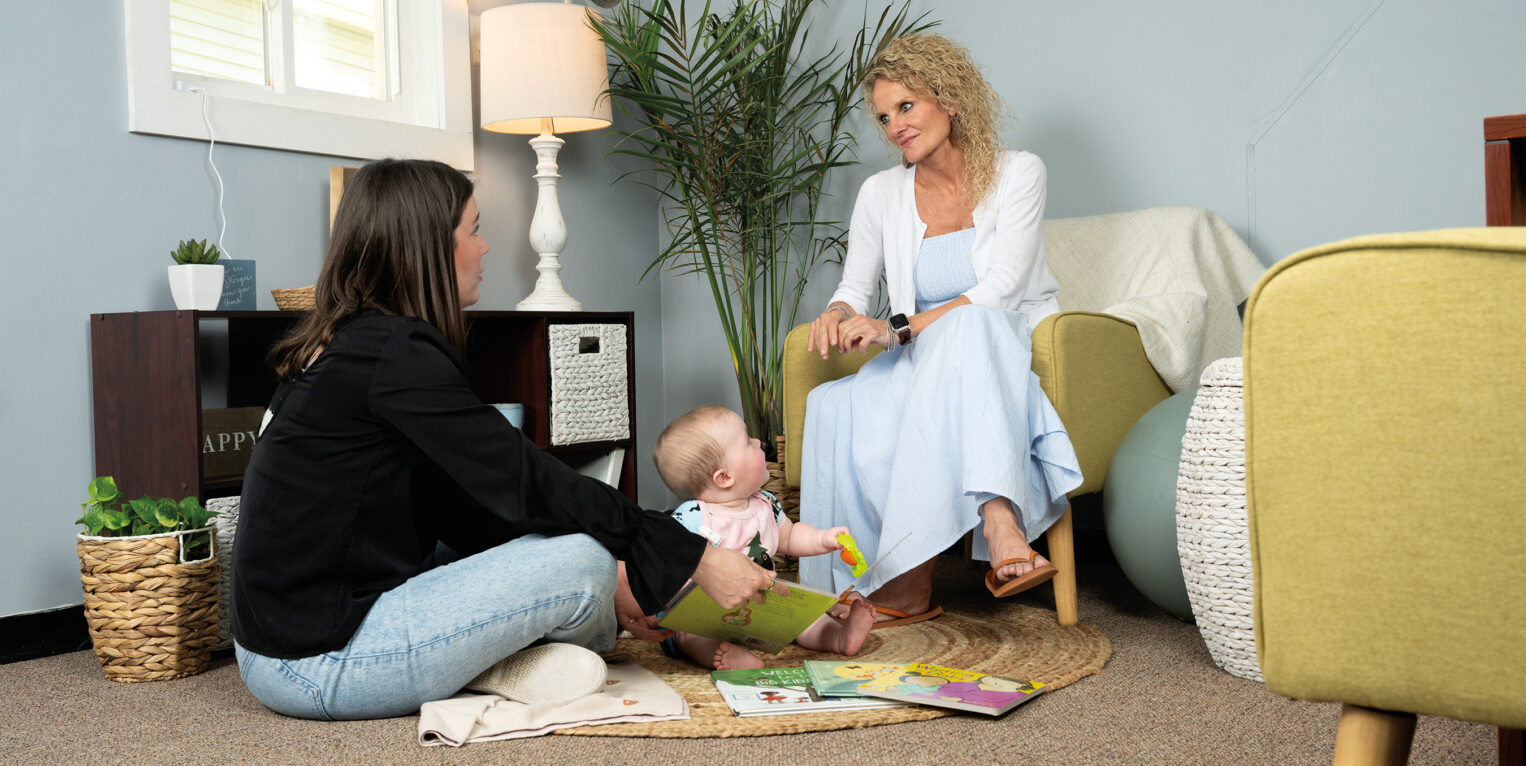
Pictured above: Jennie Tyler talks with a new mom at the Madison County Rural Health Council office in Cazenovia, NY.| Photo by: Susan Kahn
For Deb Hirsch, supporting families has always been about showing up when they need it most.
After years of working with mothers and young children through home visiting programs, she saw firsthand how many families were navigating pregnancy, childbirth and the postpartum period with little support. Today, as a social care navigator and postpartum doula with Madison County Rural Health Council (MCRHC), she helps fill that gap by providing practical guidance, emotional support and a reassuring presence during one of life’s biggest transitions.
“I realized how far a little support can go,” Hirsch said. “Having someone to listen, encourage and help can make a significant difference for both mothers and their families.”
That support looks different for every family. Some need help feeding a newborn. Others need assistance accessing community resources, navigating medical appointments or adjusting to life with a new baby. Sometimes, Hirsch said, simply having someone to talk to can make all the difference.
Hirsch is one of several doulas working through MCRHC’s Doula Initiative program, which provides free doula services to low-income pregnant individuals in rural communities who face significant barriers to accessing prenatal, birth and postpartum care. The nonprofit organization works to improve community health by advocating, educating and coordinating services for individuals and families across the region.
For Jennie Tyler, MCRHC housing coordinator, social care navigator, and birth and postpartum doula, the work is deeply personal.
“After the birth of my daughter 22 years ago, I knew I wanted to become a birth doula someday,” Tyler said. “The experience was the most impactful one of my life, and I knew I wanted to be part of that experience with others and be a support to them.”
Through the program, doulas meet with clients before birth, provide continuous support during labor and delivery, and continue working with families after a baby arrives. The goal is not only to improve health outcomes but also to help parents feel informed, supported and confident.
The need is especially significant in rural communities, where long-standing inequities in access to health care, transportation challenges and financial obstacles can make it difficult for families to receive consistent maternal health support. Low-income pregnant individuals are often disproportionately affected by these barriers, increasing the importance of community-based services that meet families where they are.
To strengthen that support, we provided a $75,000 grant from our Madison County Rural Poverty Fund to help MCRHC expand the program’s postpartum services. The funding is supporting additional training for existing doulas and community members while allowing families to receive two additional postpartum visits focused on recovery, infant care and the transition to life with a newborn.
For Stephanie Henry, director of community health at MCRHC, expanding postpartum care was a natural next step.
“I think there’s a lot more awareness of the postpartum period and the need for extra support,” she said. “Families are looking for help not only during childbirth, but throughout the critical weeks that follow.”
News & Stories
Booker T. Washington Center Chosen by Cayuga County Residents to Receive $75K for Youth-Focused Project
The winning grant will be used to create a countywide teen resource program. The program will ...
Cayuga County Residents Invited to Vote on Community-Designed Projects for $75,000
Winning Project to be Announced at October 1 Community Celebration

Tips on getting your stocks in a pile (and other reminders)!
As clients turn their attention to year-end tax and financial planning, now is an ideal ...
Central New York Community Foundation Welcomes New Hire
The Central New York Community Foundation has hired Madeline Thibault, Esq., as Philanthropic Advisor.
More Than $1.3 Million Distributed to CNY Nonprofits
The Central New York Community Foundation recently distributed $1,301,606 in grants from our Community Fund ...
What We Are Up To | CNYCF Staff Updates
Our staff takes pride in not just serving our community but actively shaping its future. ...

Why Your IRA Might Be Your Most Powerful Charitable Asset
Your IRA can do more than fund your retirement. It can also help you support ...
Chamber Chosen by Cortland County Residents to Receive $75K for Expanding Childcare
The winning grant will be used to help the chamber hire a project professional who ...
A Legacy of Kindness: Laurence A. Hoefler's Gift to Central New York
For nearly 60 years, Laurence “Larry” Hoefler has called Central New York home. Through a ...
Booker T. Washington Center Chosen by Cayuga County Residents to Receive $75K for Youth-Focused Project
The winning grant will be used to create a countywide teen resource program. The program will ...
Cayuga County Residents Invited to Vote on Community-Designed Projects for $75,000
Winning Project to be Announced at October 1 Community Celebration
Tips on getting your stocks in a pile (and other reminders)!
As clients turn their attention to year-end tax and financial planning, now is an ideal ...
Central New York Community Foundation Welcomes New Hire
The Central New York Community Foundation has hired Madeline Thibault, Esq., as Philanthropic Advisor.
More Than $1.3 Million Distributed to CNY Nonprofits
The Central New York Community Foundation recently distributed $1,301,606 in grants from our Community Fund ...
What We Are Up To | CNYCF Staff Updates
Our staff takes pride in not just serving our community but actively shaping its future. ...
Why Your IRA Might Be Your Most Powerful Charitable Asset
Your IRA can do more than fund your retirement. It can also help you support ...
Chamber Chosen by Cortland County Residents to Receive $75K for Expanding Childcare
The winning grant will be used to help the chamber hire a project professional who ...
A Legacy of Kindness: Laurence A. Hoefler's Gift to Central New York
For nearly 60 years, Laurence “Larry” Hoefler has called Central New York home. Through a ...