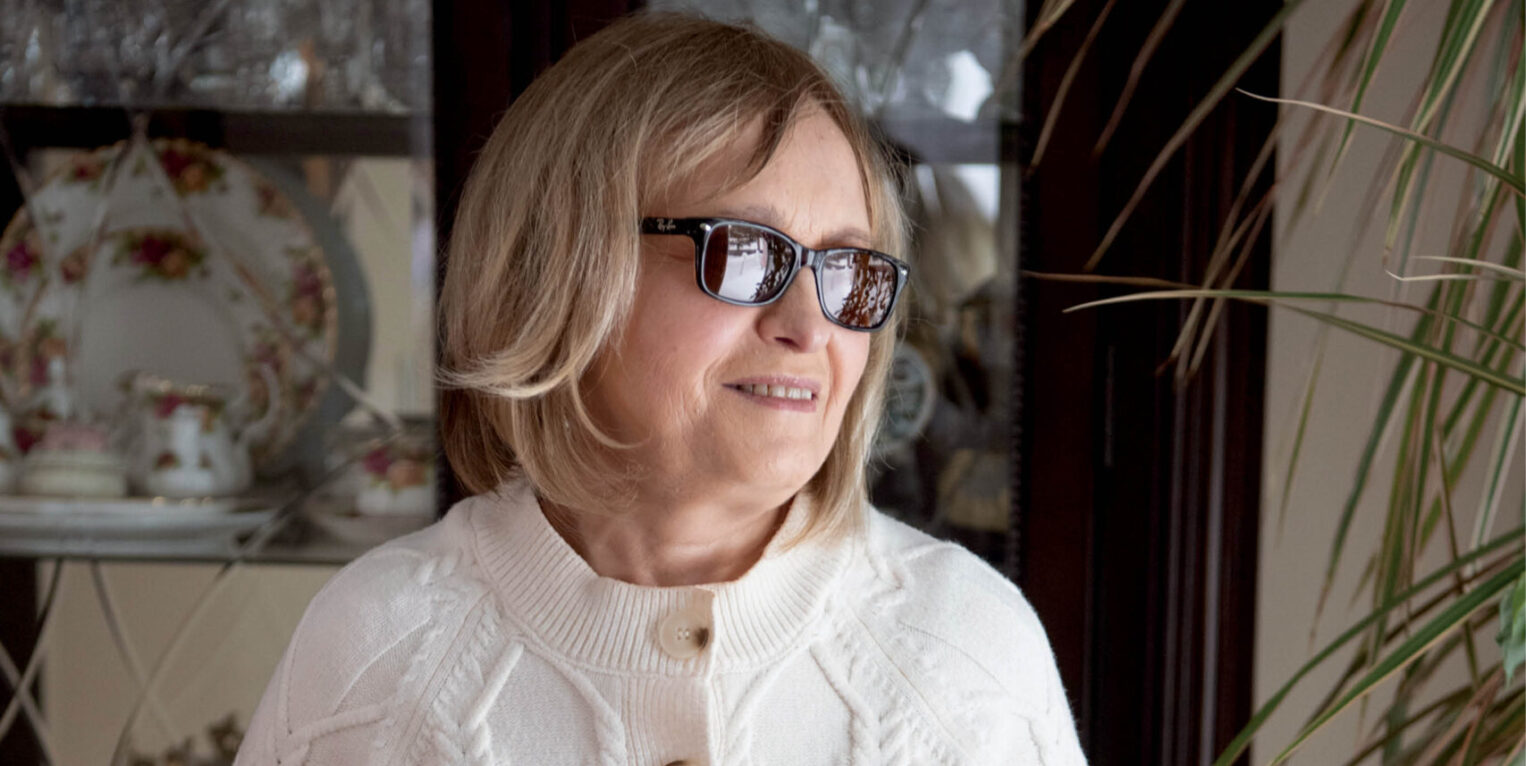
Pictured above: Vera stands with her white cane, a mobility tool that supports safe, independent travel by helping detect obstacles and orientation cues. | Photo by: Ben Cleeton
When Vera arrived in Central New York in 1993, she was nearly blind, newly immigrated from Ukraine and raising two young children — in a language she did not yet speak.
What she found, alongside medical care, was Aurora of CNY (Aurora), an organization that provides hope, empowerment and support to people who are deaf, blind, visually impaired or hard of hearing.
“Aurora helped me learn how to live,” Vera said.
Vera began losing her vision in her mid-20s after a series of surgeries failed to stop damage to her optic nerve. By the time she settled in Syracuse, she could no longer recognize faces. Through referrals from her doctor, she connected with Aurora, which provided orientation and mobility training, instruction on using a cane and critical translation services.
That early assistance helped Vera regain confidence and independence at a moment when isolation could easily have taken hold.
Over time, however, her vision loss progressed. In 2016, following the death of her husband after a prolonged hospitalization, Vera lost the remainder of her sight. The combination of grief, blindness and aging brought new challenges — many shaped by persistent stigma and systemic barriers people who are blind or visually impaired routinely face, from assumptions about their capabilities to limited access to transportation, technology and social connection.
“I was afraid,” Vera said. “Afraid to go places alone. Afraid to try new things.”
In 2022, encouraged by her doctor, Vera reconnected with Aurora and enrolled in its Social Work and Support Services program. Through personalized, at-home support, Aurora staff helped her navigate transportation, reconnect with peers and rebuild confidence.
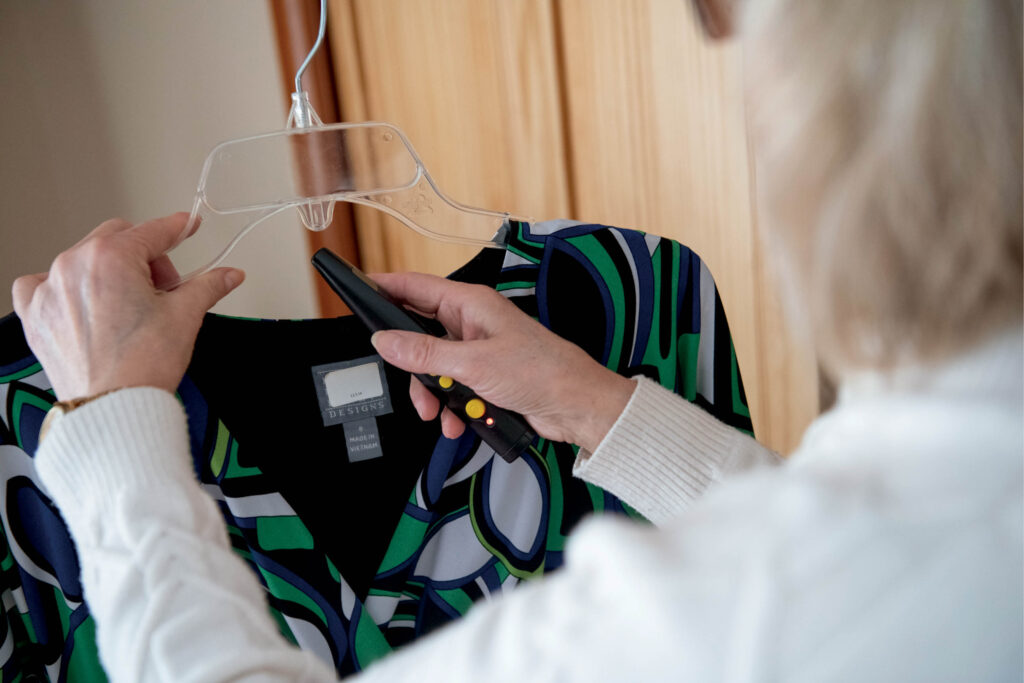
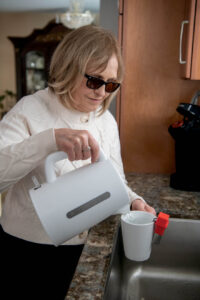
Today, Vera cooks, bakes, gardens, does laundry, travels independently and stays connected with family and friends using adaptive technology — from talking watches and money readers to a smartphone she once feared but now uses daily for email, social media and video. With Aurora’s help, she also learned how to use Centro’s Call-A-Bus service to travel independently to its weekly peer support group.
“Aurora has provided me with what I need to take care of myself,” Vera said. “That means everything.”
Stories like Vera’s are why Aurora exists — and why continued investment in its work matters.
In June we provided the organization with a $50,000 Community Grant to expand its Social Work and Support Services program, supporting increased staffing, more in-home assessments and expanded access to essential assistive devices — all designed to help individuals with sensory loss remain safely and independently in their homes.
“Sensory loss doesn’t just affect vision or hearing,” said Kate Weidman, executive director of Aurora of CNY. “It affects access — to transportation, healthcare, technology and community. Without support, people are at real risk of isolation.”
Learn more at: auroraofcny.org